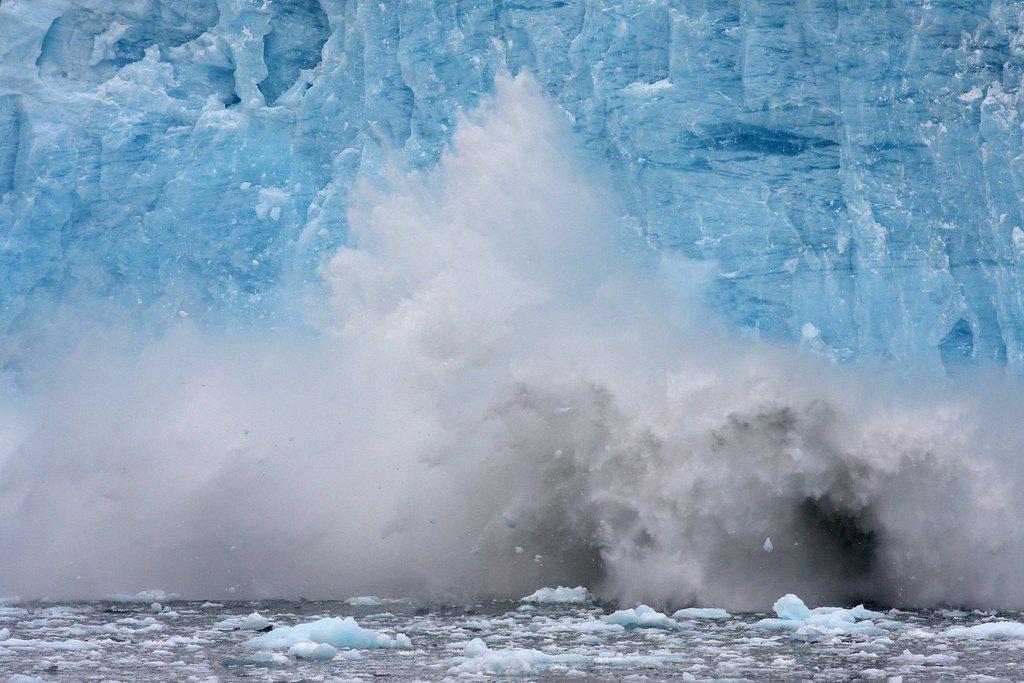
The world is warming, and fast. The World Meteorological Organization (WMO) reports that 2024 was the warmest year on record, at about 1.55°C above the late-1800s average, and that 2025 was the second or third warmest at about 1.43°C. Every year from 2015 to 2025 ranks among the 11 hottest since reliable records began in 1850.
Why is this happening? The short answer is the greenhouse effect, strengthened by the gases people release when they burn fossil fuels and clear forests. The longer answer is a story of simple physics, careful measurements stretching back more than a century, and several independent lines of evidence that all point the same way.
The greenhouse effect, simply explained
Sunlight passes through the atmosphere and warms the ground and oceans. The warmed Earth then gives off energy as invisible infrared radiation, or heat. Some gases in the air, called greenhouse gases, absorb part of that heat and send it back in all directions, including back towards the surface. The result is a warmer planet than there would otherwise be.
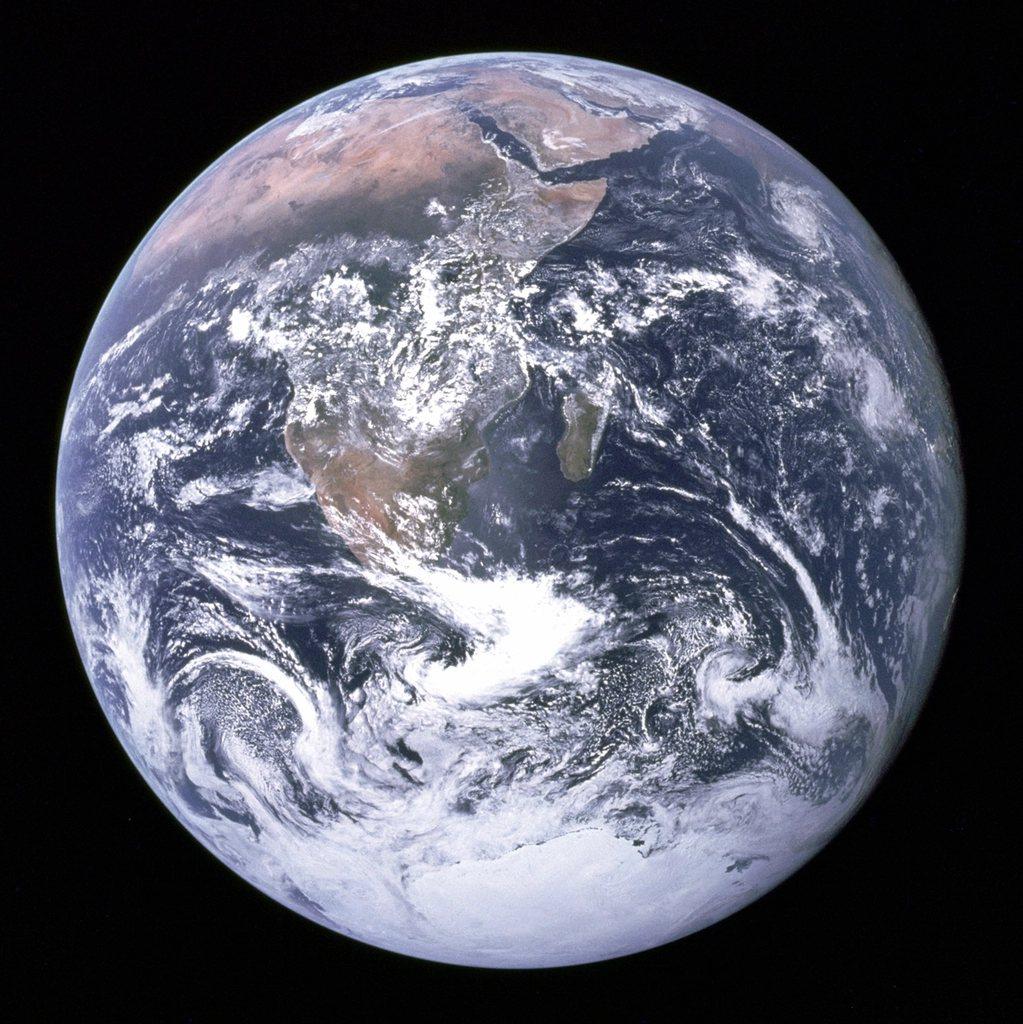
This natural greenhouse effect is essential. Without it, Earth's average surface temperature would be well below freezing, at around −18°C, instead of the roughly 15°C that makes life possible. The problem is not the greenhouse effect itself but that human activity is making it stronger.
- Carbon dioxide (CO₂): released by burning coal, oil and gas and by clearing forests; the biggest driver of warming.
- Methane: from livestock, rice paddies, landfills and leaks from oil and gas operations.
- Nitrous oxide: mostly from fertilisers used in farming.
- Fluorinated gases: factory-made chemicals used in refrigeration and industry.
- Water vapour: the most abundant greenhouse gas, but it responds to warming rather than starting it, because warmer air holds more moisture.
Scientists have known for more than 150 years
Climate change is not a new idea. In 1856 the American scientist Eunice Foote showed that a glass cylinder filled with carbon dioxide heated up more in sunlight than one filled with ordinary air, and suggested that more of the gas would make the Earth warmer. In 1859 the Irish physicist John Tyndall measured how gases such as water vapour and carbon dioxide absorb heat radiation.
In 1896 the Swedish chemist Svante Arrhenius made the first calculation of how much the planet would warm if carbon dioxide levels changed. Then, in 1958, Charles David Keeling began measuring carbon dioxide on Mauna Loa in Hawaii, recording 313 parts per million (ppm) that March. His measurements, continued today by Scripps and NOAA, became the famous Keeling Curve.
Where the extra greenhouse gases come from
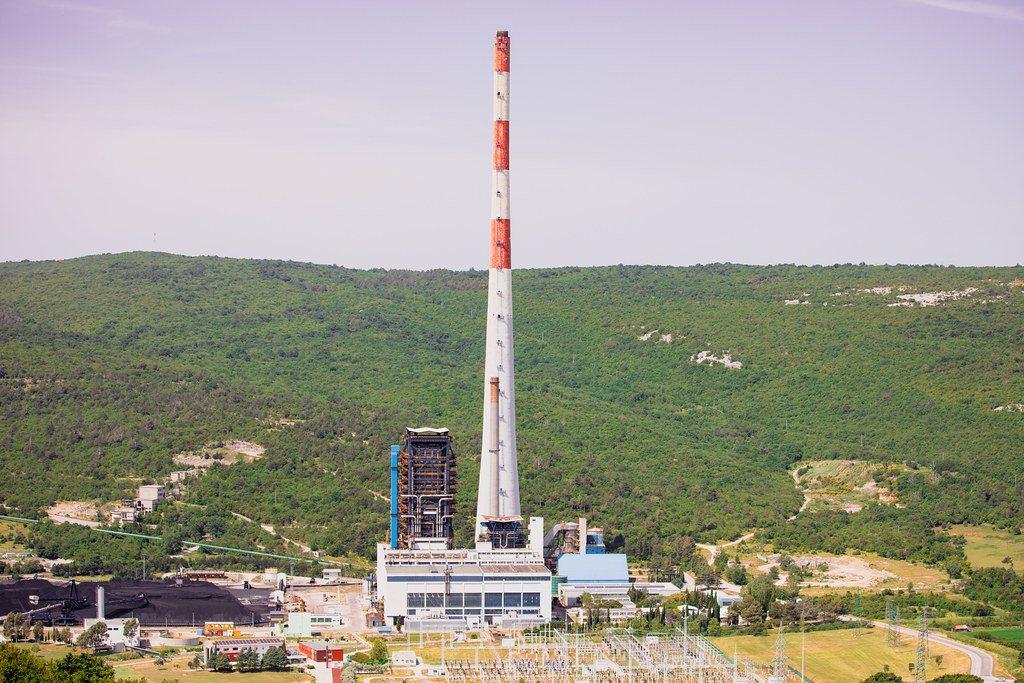
Since the Industrial Revolution, people have burned enormous amounts of coal, oil and natural gas for electricity, heating, industry and transport. Burning these fossil fuels releases carbon that plants locked away millions of years ago. Cutting down forests adds more, because trees store carbon and cleared land absorbs less of it.
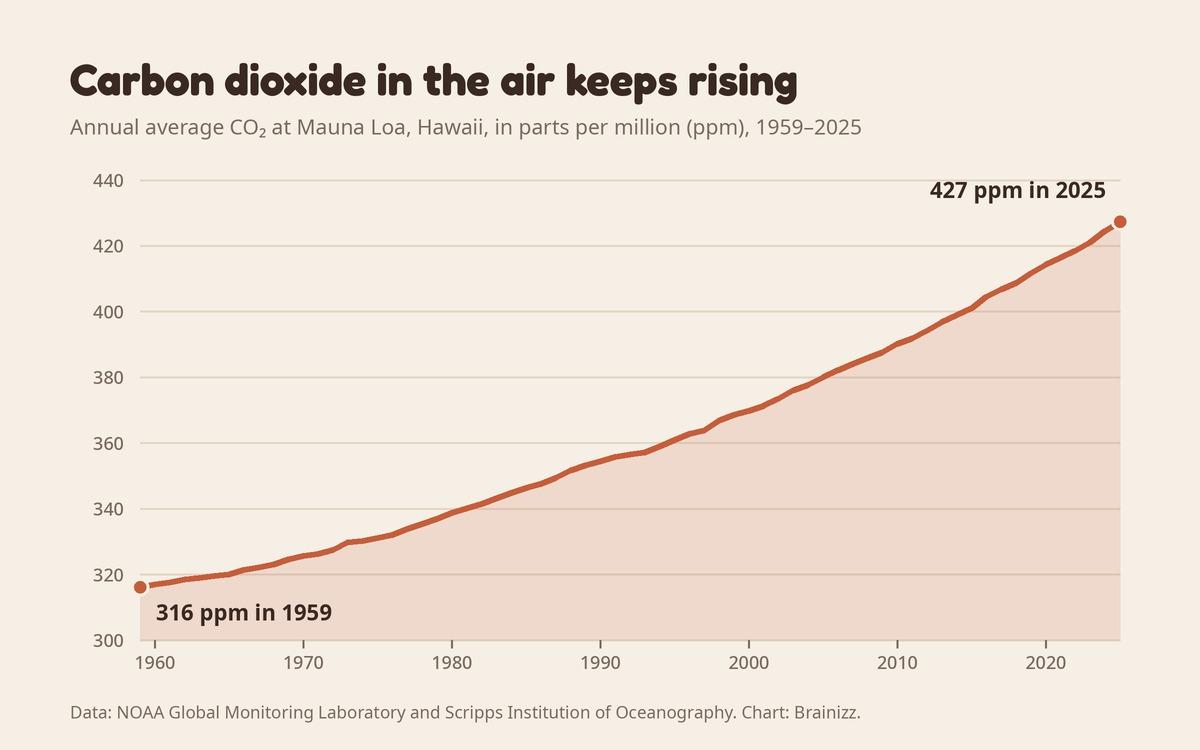
The result shows up clearly in the measurements. NASA notes that human activity has raised the amount of carbon dioxide in the atmosphere by nearly 50% since 1750. The WMO reports that in 2024 the global concentrations of carbon dioxide, methane and nitrous oxide all reached their highest levels in at least 800,000 years, a record preserved in air bubbles trapped in ancient ice. At Mauna Loa, the monthly average reached a new peak of about 432 ppm in May 2026.
How do we know humans are responsible?
Climate has changed naturally before, so scientists test every possible explanation. Several independent clues show that today's warming is caused by people rather than by natural cycles.
- It is not the Sun. NASA reports that the energy reaching Earth from the Sun has shown no net increase since the late 1800s, while temperatures have risen sharply.
- The upper atmosphere is cooling. If a brighter Sun were to blame, the whole atmosphere would warm. Instead, the upper atmosphere is cooling while the surface warms, the pattern expected when greenhouse gases trap heat lower down.
- The extra carbon has a fossil fingerprint. Fossil fuels formed from plants millions of years ago and carry a distinctive chemical signature, and that signature is showing up in the atmosphere.
- Volcanoes are far too small. Volcanoes release carbon dioxide, but much less each year than human activity does.
- The speed is unusual. Natural shifts such as the ice ages unfolded over thousands of years. The IPCC finds that global surface temperature has risen faster since 1970 than in any other 50-year period in at least the last 2,000 years.
Human activities, principally through emissions of greenhouse gases, have unequivocally caused global warming.
The IPCC, which assesses the work of thousands of scientists for the world's governments, estimates that the planet's surface was about 1.1°C warmer in 2011–2020 than in 1850–1900. Land has warmed faster than the ocean, by about 1.6°C compared with 0.9°C.
The evidence all around us
Rising temperatures are only one sign. Most of the extra heat goes into the sea: NASA says the ocean has absorbed about 90% of the excess heat from warming over the past century, and the WMO reports that ocean heat content reached a new record in 2025.
- Sea levels are rising faster. The WMO reports that global sea level rose by about 4.75 mm a year from 2012 to 2025, compared with 2.65 mm a year from 1993 to 2011, as water warms and expands and land ice melts.
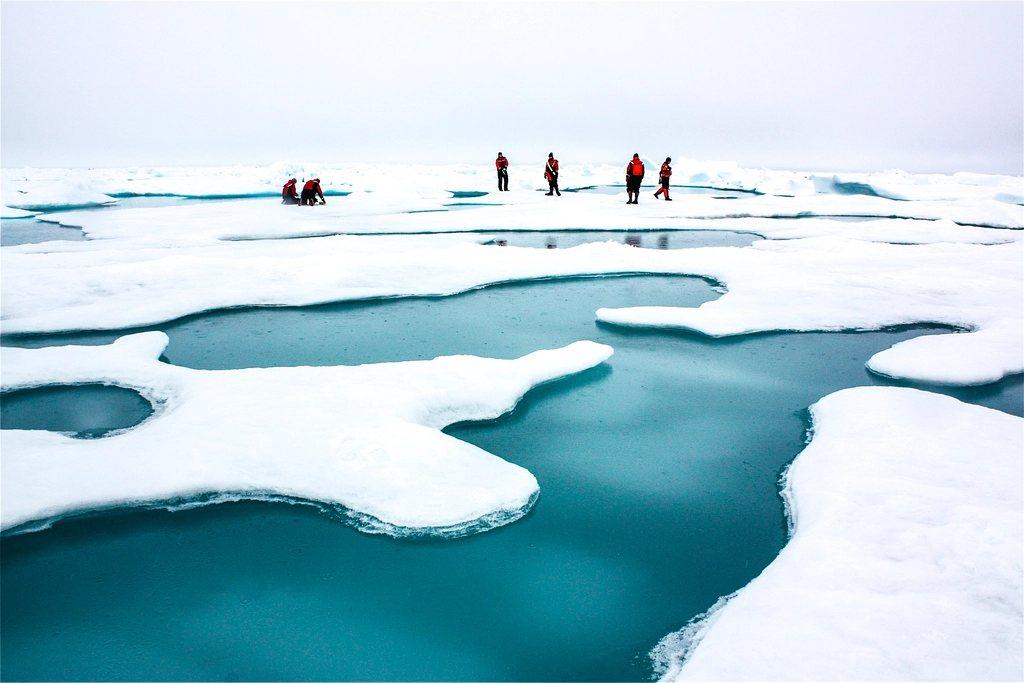
- Ice is shrinking. The highest extent of Arctic sea ice in 2025 was the lowest winter maximum on record, and losses from reference glaciers in 2024/25 were among the five largest ever measured.
- Extremes are changing. Heatwaves are becoming more frequent and more intense, and heavy rainfall events are growing more severe in many regions, as a warmer atmosphere holds more moisture.
- The planet is out of balance. The WMO says Earth is absorbing more energy than it releases, and this imbalance reached a new high in 2025.
Why a degree or two matters
A rise of 1.5°C or 2°C may sound small, but it is a global average. It includes the oceans, which warm slowly, so many land areas warm much more, and it shifts the odds of extreme heat, drought, wildfire and flooding. Every fraction of a degree raises the risks to food, water, health and nature.
That is why nearly every country signed the Paris Agreement in 2015, which aims to hold warming well below 2°C and to pursue efforts to limit it to 1.5°C above pre-industrial levels.
Common myths, checked
- “The climate has always changed.” True, but past changes had causes, and today the main cause is human emissions. The current rise is also unusually fast.
- “It's just the Sun.” Solar energy has not increased overall since the late 1800s, and the cooling upper atmosphere rules the Sun out.
- “Carbon dioxide is only a tiny part of the air.” It makes up about 0.04% of the atmosphere, but it is very effective at trapping heat. Small amounts of a powerful substance can have large effects.
- “Scientists don't agree.” The IPCC's reports, reviewed and approved by the world's governments, state that human influence is unequivocal.
- “It was cold last week, so warming isn't real.” That is weather. Climate is about long-term trends across the whole planet.
What can be done?
Because carbon dioxide stays in the atmosphere for a very long time, warming will only stop when the world stops adding more, reaching what scientists call net zero emissions. The main ways to get there are already well known.
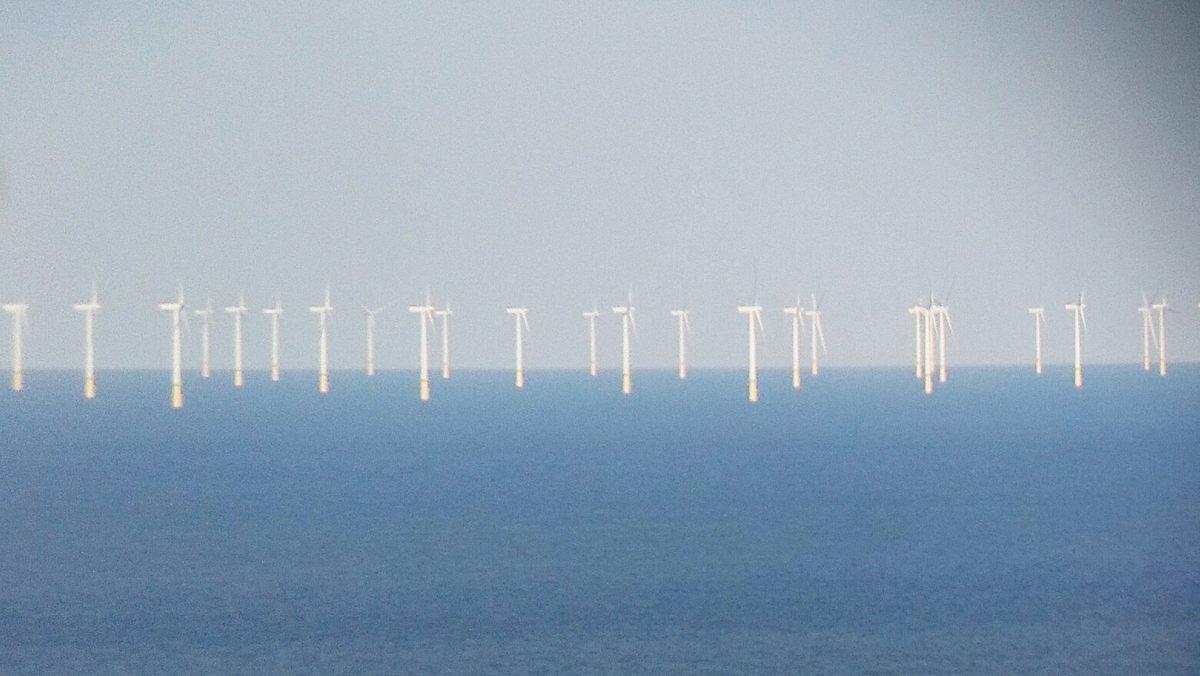
- Generate electricity from clean sources such as wind, solar, hydro and nuclear power instead of coal and gas.
- Use energy more efficiently in homes, buildings and industry.
- Switch transport and heating to clean electricity, for example with electric vehicles and heat pumps.
- Protect and restore forests, wetlands and other natural carbon stores.
- Cut methane from agriculture, landfills and oil and gas operations.
- Prepare for the changes already under way, such as stronger flood defences and heat-health plans.
Individual choices matter too, especially for people with high energy use, but the largest cuts come from changes in energy systems, industry and policy.
The bottom line
The Earth is getting warmer because human activity, above all burning fossil fuels, has thickened the blanket of greenhouse gases that keeps our planet warm. The physics has been understood since the 1800s, the measurements are clear, and the effects can already be seen in the oceans, the ice and the weather. The same science also shows that how much warmer the planet becomes depends on the choices made now.
Curious how much you remember? Try the Brainizz science and geography quizzes linked below.